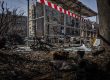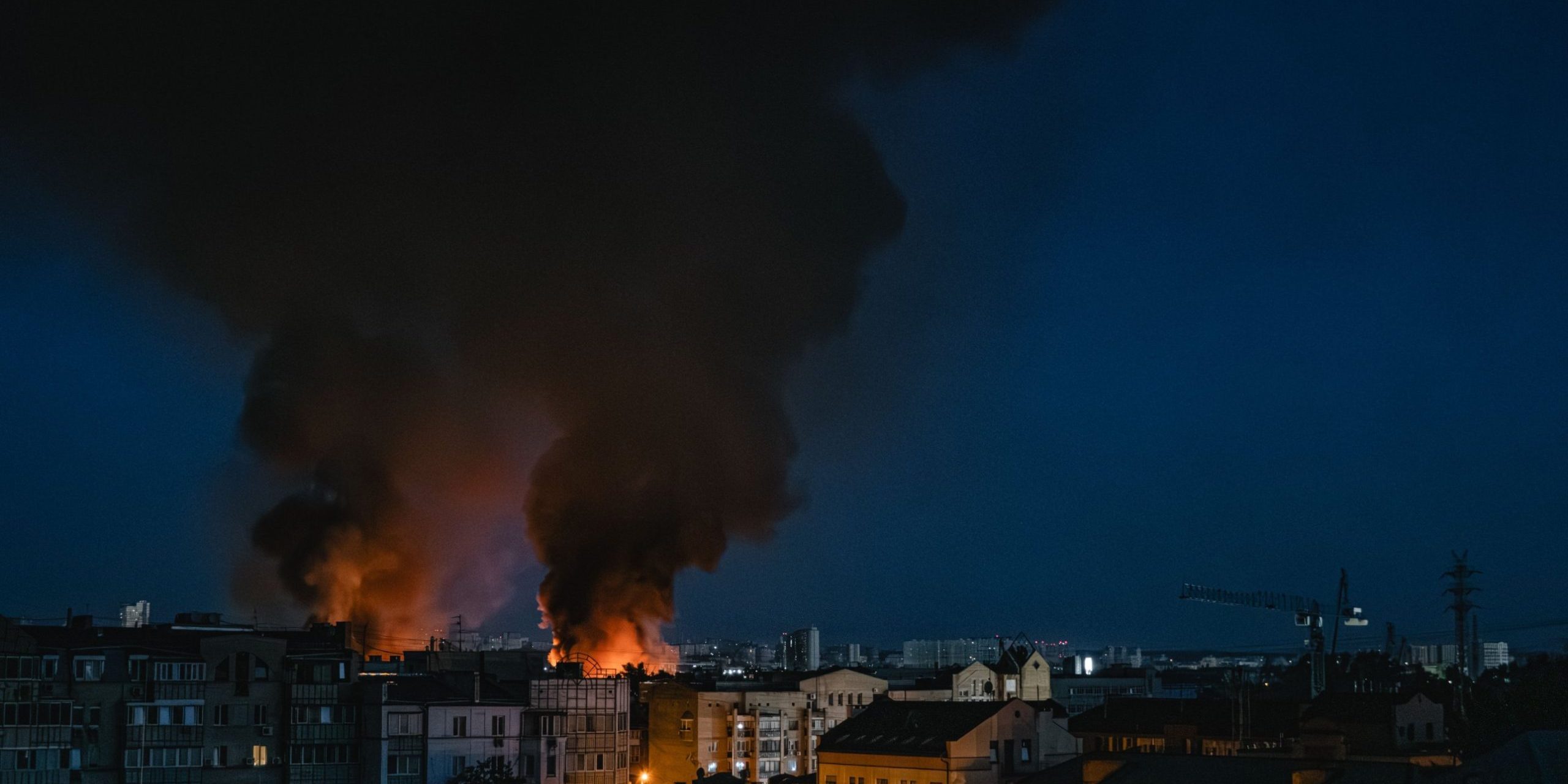
Pre-screening interviews
During August, September and October 2026, lawyers and psychologists from the Center for Assistance in War Crimes Documentation of the “OPORA in Poland” Foundation (hereinafter referred to as the Center) conducted 7 pre-screening interviews with victims and witnesses of war crimes currently residing in Poland.
The Center continues to collect testimonies outside Warsaw in order to reach people who have settled in other parts of Poland. During the reporting period, all interviews were conducted in the Lesser Poland, Lower Silesian and Świętokrzyskie Voivodeships.
| Place of evidence collection (August–October 2026) | Number of interviews |
| Kraków, Lesser Poland Voivodeship | 5 |
| Wrocław, Lower Silesian Voivodeship | 1 |
| Kielce, Świętokrzyskie Voivodeship | 1 |
Witness profile
Typical witness profile: The majority of the interviewed witnesses (86%) are women (6), and 14% are men (1). This distribution is influenced by specific border crossing rules in Ukraine during martial law. Regarding age distribution, the interviewed witnesses are categorized as follows: 57% (4) are aged 46–60, 29% (2) are aged 31–45, and 14% (1) is over 60 years old. None of the witnesses was under 30.
Regional affiliation of the interviewees: All interviewees come from territories that were occupied after February 24, 2022. Six of the seven interviewees come from Kherson region.
| Region | Number of interviewees |
| Kherson | 6 |
| Donetsk | 1 |
Types of war crimes revealed during pre-screening interviews
| War crime type | Number of cases reported by eyewitnesses |
| Active military action near or within residential quarters | 1 |
| Enemies using civilian clothes, uniforms and emblems of the Ukrainian Armed Forces or humanitarian (also ICRC) or medical institutions | 2 |
| The use of prohibited weapons, such as chemical weapons, cluster munitions, phosphorus bombs, etc. | 1 |
| Use of civilian infrastructure (schools, hospitals, culture institutions, etc.) for military purposes | 4 |
| Deportation or forced displacement of a person (group of persons), and children | 1 |
| Abduction or keeping hostage a person | 4 |
| Torture or violent treatment of people | 7 |
| Illegal detention or imprisonment of a person, mob justice | 6 |
| Obstruction of access to medical care or evacuation | 3 |
| Damage to their own property | 4 |
| Damaging other persons’ property | 5 |
| Damage or destruction of civilian facilities (schools, health care facilities, residential care institutions, etc.) | 4 |
| Damage to other infrastructure facilities (electricity, gas, water, oil supply networks, etc.) | 3 |
| Environmental damage caused by shelling | 4 |
| Hiding behind civilians (the use of “living shields”) | 2 |
| Pillaging of property | 6 |
| Fragments of shells in residential neighbourhoods | 1 |
| Purposeful settlement of Russians in the captured Ukrainian territories | 5 |
All interviewees reported witnessing or hearing about several types of war crimes in their respective localities. Four of them described themselves as victims, five as relatives of victims. Unlike in previous periods, crimes against persons were mentioned most often. Specifically:
- All 7 witnesses reported torture or violent treatment of people.
- Illegal detention or deprivation of liberty and pillaging of property were each reported by 6 witnesses.
- Destruction or damage to other persons’ property and the settlement of Russians in the occupied territories were each reported by 5 witnesses.
- Hostage-taking, the use of civilian infrastructure for military purposes, damage to civilian facilities and environmental damage were each reported by 4 witnesses.
Summary of information collected from eyewitnesses (by type of crime)
1. Illegal detention, torture and hostage-taking
Most testimonies in this period concern people detained by Russian forces because of their past service, their family ties to the Ukrainian Armed Forces or their refusal to cooperate. Witnesses from Kherson region reported that the occupiers used lists of former ATO participants and of people who attended pro-Ukrainian rallies to find and detain them. Detainees were taken to basements and other places of torture; some returned badly beaten, and others never returned.
One witness reported that her brother, a former military officer, was detained together with his wife after hiding for a long time. His wife was released several days later in a severe condition and still does not communicate with anyone. He was beaten, transported with a bag over his head, held shackled in a pit and twice taken out for mock execution. His property and car were seized, and he was later sentenced by a Russian court on weapons charges. According to the family, he is now held in Russia in very poor health and without medical care.
Another witness and her husband were searched repeatedly, then detained with pillowcases over their heads, held in separate cells and interrogated, including with a polygraph. The witness was struck against a wall, and her husband was beaten and threatened with further injury. Criminal cases were opened against them for alleged cooperation with Ukrainian law enforcement, and they were later served with a deportation order. The same witness described an acquaintance who was tortured with electric shocks while soldiers fired near his head.
Other witnesses reported that a relative was held in a basement for about two weeks after refusing to pay a ransom for property the soldiers had taken, and was beaten and pressured to accept Russian citizenship. A former ATO participant was detained while trying to leave the occupied territory, severely beaten in custody and given a suspended sentence. One witness’s friend was detained twice; after the second detention his whereabouts remain unknown, and his family is still searching for him.
2. Violence and threats against civilians
A witness from Donetsk region reported that Russian soldiers seized the premises where she lived and worked and stayed there in rotation. She was threatened with death and searched nine times. A soldier broke her fingers with a rifle butt, and on another occasion drunk soldiers broke in seeking “sexual entertainment”; she managed to escape. Later, a soldier beat her until she repeatedly lost consciousness and stopped only when his commander intervened. No medical care was available, so her injuries were never documented. Her young granddaughter was so frightened that she stopped speaking for several years and is still being treated for anxiety.
3. Pillaging, seizure of property and settlement of Russians
Witnesses consistently reported that Russian soldiers moved into private houses and apartments without permission, looted household appliances, furniture and vehicles, and took jewellery during searches. In one case soldiers settled in houses next to local residents to avoid Ukrainian strikes, using civilians as cover. The families of men serving in the Ukrainian Armed Forces were pressured, and their homes and businesses were seized, in one case by a local collaborator who beat a relative and took the keys. One witness also reported that soldiers killed animals, cut down trees and set fires and tripwires in a protected nature area.
4. Coercion and persecution under occupation
Witnesses described public sector employees being summoned to meetings where the occupation authorities pressured them to cooperate. Anti-Russian rallies were dispersed by armed soldiers using gunfire and smoke grenades. Residents were pressured to obtain Russian passports, forbidden to speak Ukrainian and visited at home by people with armed escorts during the so-called referendum.
5. Shelling, prohibited weapons and destruction of civilian property
One witness suffered a concussion when Russian air defence intercepted targets directly above residential buildings. He also saw a child injured by cluster munitions and photographed her injuries. Two witnesses reported that their homes were flooded after the destruction of the hydroelectric dam in 2023, and one reported that her apartment was damaged by a strike on a neighbouring flat in 2026.
6. Evacuation, filtration and deportation
Witnesses who left the occupied territories passed through numerous Russian checkpoints, where their belongings and phones were searched. One family paid for a place in an evacuation convoy, which Russian forces then held in open terrain for three days next to what appeared to be artillery positions, using it as a “living shield”. Others left through Crimea, Russia and Belarus and underwent filtration, including phone checks, body searches and fingerprinting. One witness reported that a relative cannot leave the occupied territory because her serious illness makes the journey impossible.