Pre-screening interviews
During May, June and July 2026, lawyers and psychologists from the Center for Assistance in War Crimes Documentation of the “OPORA in Poland” Foundation (hereinafter referred to as the Center) conducted 4 pre-screening interviews with victims and witnesses of war crimes currently residing in Poland.
The Center continues to collect testimonies outside Warsaw in order to reach people who have settled in other parts of Poland. During the reporting period, one interview was conducted in Wrocław, Lower Silesian Voivodeship.
| Place of evidence collection (May–July 2026) | Number of interviews |
| Warszawa, Masovian Voivodeship | 3 |
| Wrocław, Lower Silesian Voivodeship | 1 |
Witness profile
Typical witness profile: All of the interviewed witnesses (100%) are women (4). As in previous periods, this distribution is influenced by specific border crossing rules in Ukraine during martial law. Regarding age distribution, the interviewed witnesses are categorized as follows: 50% (2) are aged 31–45, 25% (1) is aged 46–60, and 25% (1) is over 60 years old. None of the witnesses was under 30.
Regional affiliation of the interviewees: All interviewees come from regions that were fully or partially occupied or are located near the front line. One interviewee from Zaporizhzhia region also testified about events in Kharkiv and in Balakliia, Kharkiv region, where she stayed at the beginning of the full-scale invasion.
| Region | Number of interviewees |
| Kharkiv | 1 |
| Kherson | 1 |
| Luhansk | 1 |
| Zaporizhzhia | 1 |
Types of war crimes revealed during pre-screening interviews
| War crime type | Number of cases reported by eyewitnesses |
| Killings (shooting) or wounding civilians | 1 |
| Active military action near or within residential quarters | 3 |
| Enemies using civilian clothes, uniforms and emblems of the Ukrainian Armed Forces or humanitarian (also ICRC) or medical institutions | 2 |
| Use of civilian infrastructure (schools, hospitals, culture institutions, etc.) for military purposes | 2 |
| Rape or other sexual violence | 1 |
| Torture or violent treatment of people | 2 |
| Illegal detention or imprisonment of a person, mob justice | 1 |
| Obstruction of access to medical care or evacuation | 2 |
| Damage to their own property | 4 |
| Damaging other persons’ property | 3 |
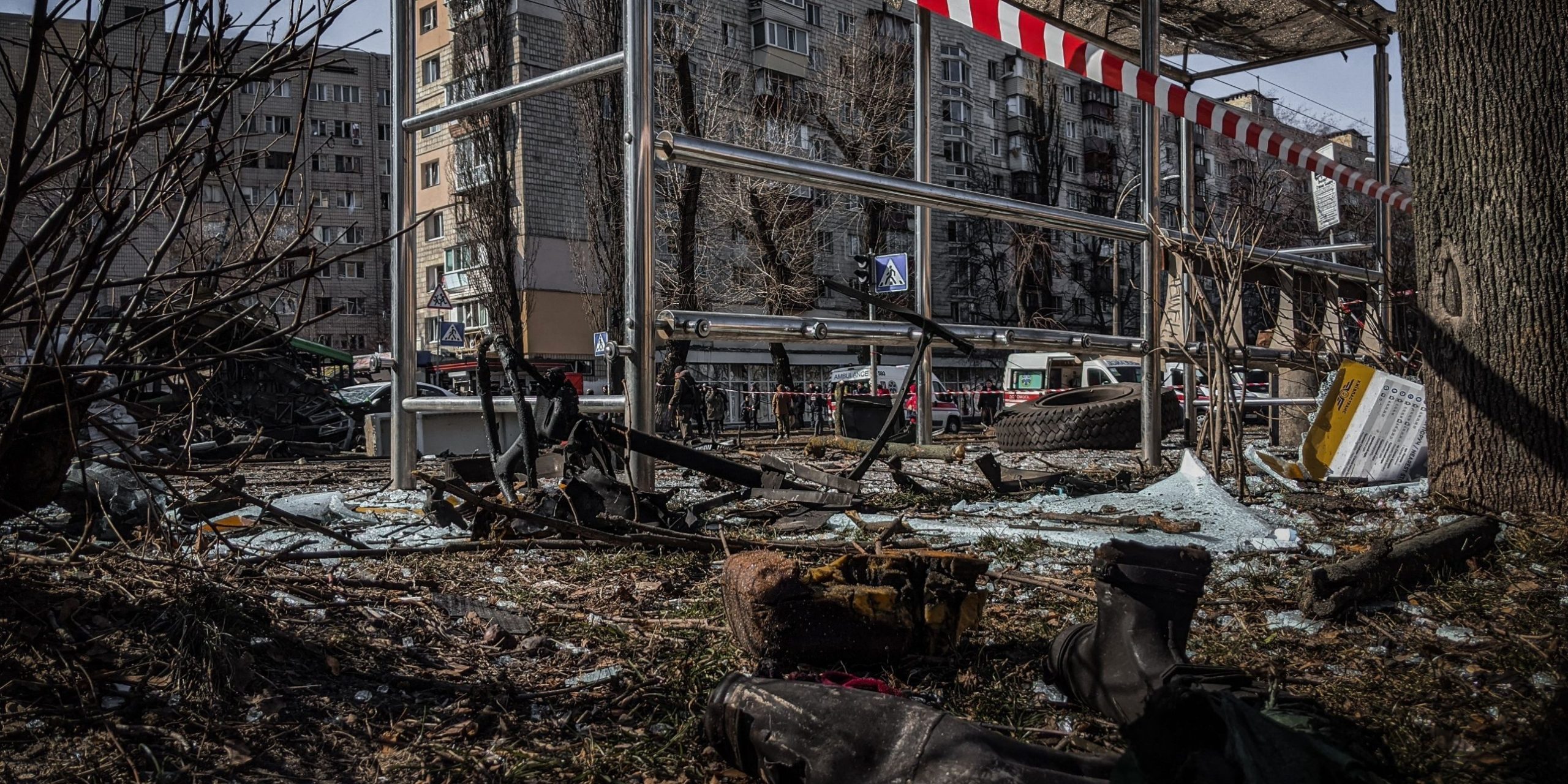
| Damage or destruction of civilian facilities (schools, health care facilities, residential care institutions, etc.) | 3 |
| Damage to other infrastructure facilities (electricity, gas, water, oil supply networks, etc.) | 3 |
| Environmental damage caused by shelling | 1 |
| Hiding behind civilians (the use of “living shields”) | 2 |
| Pillaging of property | 2 |
| Fragments of shells in residential neighbourhoods | 3 |
| Purposeful settlement of Russians in the captured Ukrainian territories | 2 |
| Other | 1 |
All interviewees reported witnessing or hearing about several types of war crimes in their respective localities. Three of them described themselves as eyewitnesses, all four as victims, and two as relatives of victims. As in previous periods, destruction or damage to property was mentioned most often. Specifically:
- All 4 witnesses reported damage to their own property, and 3 reported destruction or damage to other persons’ property.
- Damage or destruction of civilian facilities, such as schools, medical facilities and care institutions, was reported by 3 witnesses.
- Damage to infrastructure, including electricity, gas, water and oil networks, was reported by 3 witnesses.
- Fighting in residential neighbourhoods and shell fragments in residential areas were each reported by 3 witnesses.
- Torture or violent treatment was reported by 2 witnesses; killings of civilians, sexual violence and illegal detention were each reported by 1 witness.
Summary of information collected from eyewitnesses (by type of crime)
1. Use of civilian facilities for military purposes and destruction of civilian infrastructure
A witness from Luhansk region reported that Russian forces used the premises of a children’s care institution as a military base while children were still there. Military vehicles were parked on the grounds under camouflage netting, and soldiers took food intended for the children. Staff were pressured to cooperate with the occupying authorities.
The witness also reported that local hospitals were looted, occupied by Russian troops and later damaged or destroyed, and that a school was used to house soldiers. According to her, a large group of patients of a medical institution was taken away by the occupying forces, and the fate of many of them remains unknown.
2. Shelling and living conditions in frontline and occupied areas
A witness from Zaporizhzhia region described the first weeks of the invasion, which she spent in Kharkiv region. She saw critical infrastructure burning after shelling and reported that Russian soldiers fired at residential houses from military vehicles for entertainment. Her family’s house was damaged by an air strike while they were sheltering inside.
The town lacked food, heating and medicine. Civilians were shot at while looking for food, and the witness’s child developed pneumonia in freezing temperatures.
3. Killings, torture and violence against civilians
A witness from Kherson region reported that, during the occupation, Russian soldiers harassed her and beat her husband for amusement. She also overheard soldiers’ conversations that may indicate the rape of an elderly woman. Her parents, who remained in the occupied territory, were later found dead with gunshot wounds; Russian media attributed their deaths to a Ukrainian drone strike.
A witness from Kharkiv region reported that in March 2022 Russian soldiers broke into her house looking for her husband, who had joined the Territorial Defence. They looted valuables, physically assaulted her and threatened to take her “to the basements”. She left the following day. As a result of the beating, she now has a serious disability.
4. Illegal detention and persecution in occupied territories
One witness, drawing on accounts of relatives living under occupation in Zaporizhzhia region, reported repeated house searches, including for watching Ukrainian television, surveillance of phone calls and threats against people who spoke Ukrainian. During the so-called referendum, soldiers stopped people in the streets and forced them to vote.
The witness also described acquaintances who refused to cooperate with the occupying authorities or worked in the media. They were threatened, detained or imprisoned in Russia, and in one case later found dead.
5. War crimes against children and obstruction of medical care and evacuation
The same witness reported that during evacuation from the occupied territory, Russian soldiers at a checkpoint questioned her young son about whether his father served in the Ukrainian Armed Forces. According to her, children travelling with relatives but without their parents were sometimes not allowed to leave. A seriously ill relative remaining under occupation was initially refused medical care and was treated only after family members intervened.